In a world where digital distractions are everywhere, it’s becoming increasingly difficult for students to stay engaged with traditional learning methods. But what if there was a way to make learning not only fun but also interactive and deeply engaging? Welcome to the transformative power of creative hands-on projects. These projects are the key to unlocking a whole new level of education that is not only memorable but also incredibly effective. At the Peak Education Center, educators have found that the secret to captivating the minds of students is through immersive, hands-on experiences. And the best part? These projects can be tailored to various age groups and subjects, making them an essential tool in modern education.
The Power of Hands-On Learning
There’s something uniquely powerful about hands-on learning that traditional classroom lectures just can’t match. When students get to physically engage with the material, their brains are more actively involved, leading to better retention and understanding. Studies have shown that students who engage in interactive projects tend to outperform their peers in more conventional learning settings. This is precisely why hands-on learning is such a crucial part of the curriculum at the Peak Education Center. Whether it’s building a model, conducting experiments, or working on a real-world project, students learn more when they are directly involved in the process.
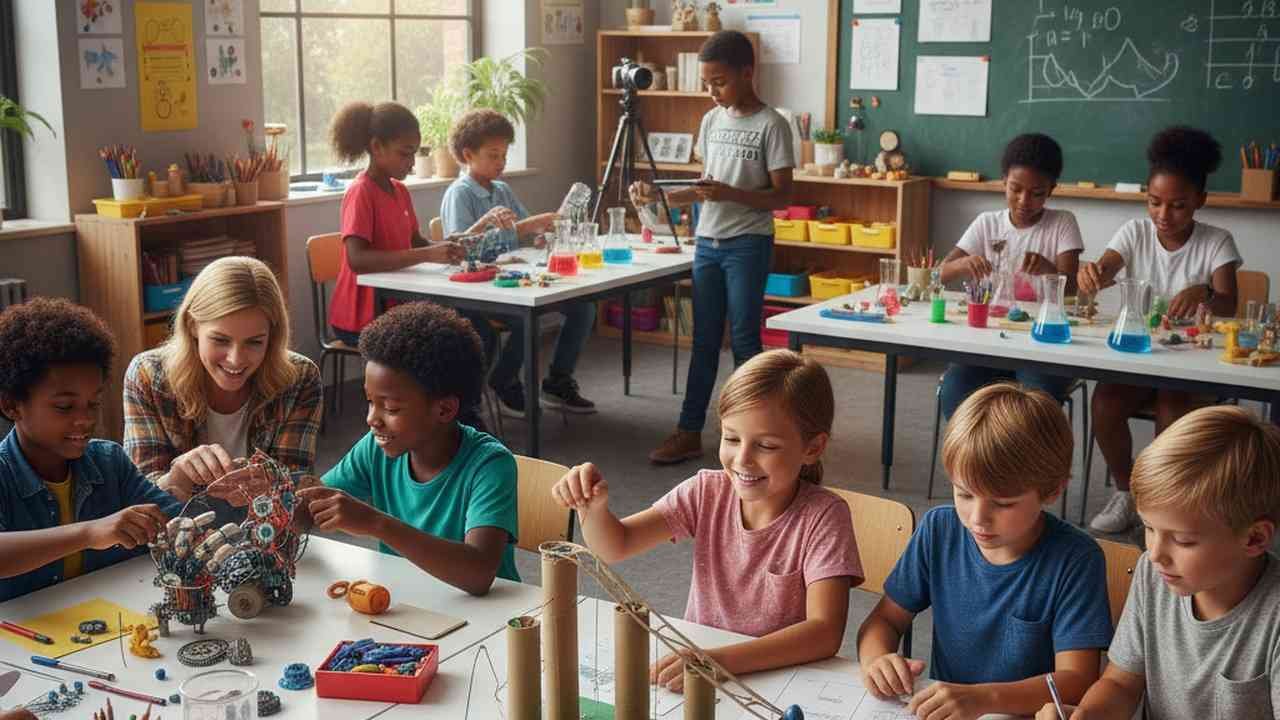
Imagine a classroom where students are not simply reading from a textbook but instead using their creativity to bring concepts to life. For example, in a science project, students might create their own ecosystem, measuring temperature, humidity, and plant growth. This isn’t just about getting the right answers – it’s about learning through trial and error, adapting, and building critical thinking skills. These experiences become etched in the student’s mind, making learning feel less like a chore and more like an exciting journey of discovery.
Why Creativity Matters in Education
Creativity isn’t just a buzzword – it’s a core element of effective learning. When students are encouraged to think creatively, they are more likely to come up with innovative solutions to problems, see connections between disparate ideas, and express themselves in unique ways. The Peak Education Center recognizes the immense value of creativity and incorporates it into every hands-on project. Whether it’s designing a bridge out of popsicle sticks or creating a working model of a volcano, the emphasis is always on fostering original thinking and problem-solving.
Creativity in learning also helps students develop emotional intelligence. By working on projects that require teamwork and collaboration, students learn how to communicate their ideas, listen to others, and adapt to different perspectives. These experiences prepare them for the real world, where creativity and collaboration are often the keys to success. Moreover, when students see their ideas come to life through these projects, it boosts their confidence and motivation, driving them to pursue more ambitious projects in the future.
Interactive Learning: A New Era of Engagement
Gone are the days when students were passive recipients of information. In today’s world, engagement is everything. To capture the attention of today’s students, educators need to tap into interactive learning methods that allow students to take control of their educational journey. Hands-on projects are the perfect vehicle for this kind of learning. At the Peak Education Center, every project is designed to be immersive, allowing students to interact with the material in a way that feels natural and exciting.
Think of it like this: instead of merely reading about the water cycle, students could create their own water cycle experiment. They can watch water evaporate, condense, and precipitate right in front of them. They don’t just memorize the steps of the cycle – they experience it firsthand. This kind of experiential learning makes the process of understanding more visceral and unforgettable, creating a deeper connection to the subject matter. This is why interactive learning has become a cornerstone of education, particularly in places like the Peak Education Center, where students are not only encouraged but required to participate actively in their learning process.
The Role of Technology in Hands-On Projects
Incorporating technology into hands-on projects takes learning to a whole new level. From virtual simulations to coding projects, technology enhances the hands-on experience by offering new ways to interact with concepts. The Peak Education Center understands that technology can be a powerful tool when used correctly, and they integrate cutting-edge tools into their hands-on projects. For example, students might use 3D printing to bring their creative designs to life or employ virtual reality to simulate complex environments. This combination of traditional and modern methods ensures that students stay engaged while also developing valuable tech skills that will serve them well in the future.
Moreover, the use of technology allows for projects to be more personalized. With access to online platforms, students can collaborate with peers across the globe, gaining new perspectives and insights that wouldn’t be possible otherwise. For example, a geography project might include using Google Earth to explore different terrains, or a history project could involve researching ancient civilizations through digital archives. These technological tools amplify the hands-on experience, ensuring that learning remains both relevant and highly engaging.
Real-World Applications: Bridging the Gap Between Theory and Practice
One of the most powerful aspects of hands-on projects is their ability to bridge the gap between theory and real-world application. It’s one thing to read about engineering principles in a textbook, but it’s entirely different to apply those principles when designing a structure. This is where hands-on learning really excels. The Peak Education Center is dedicated to creating projects that have real-world relevance, allowing students to understand how what they’re learning applies to their lives and future careers.
Take, for instance, a project on renewable energy. Instead of simply reading about solar panels, students at the Peak Education Center might work on a project to design their own solar-powered devices. They learn about the science behind solar energy, the engineering required to harness it, and the environmental benefits of using renewable energy sources. Through this hands-on experience, students gain practical knowledge that they can carry with them, making the learning process more meaningful and impactful.
Fostering Teamwork and Collaboration Through Hands-On Projects
Collaboration is a skill that is essential in nearly every field, from business to healthcare to the arts. Hands-on projects provide an ideal platform for students to develop teamwork skills, as many of these projects require group efforts. At the Peak Education Center, students are encouraged to work together, sharing ideas, solving problems, and learning from each other. These projects mimic real-world scenarios where collaboration is crucial to success.
By working on hands-on projects, students learn how to navigate different personalities, resolve conflicts, and contribute to a collective goal. This not only helps them in school but also prepares them for the workforce, where teamwork is often the key to innovation and success. Whether it’s building a robot, creating a short film, or developing a marketing strategy, these projects teach students the importance of cooperation, communication, and mutual respect.
How Hands-On Projects Boost Critical Thinking and Problem-Solving
Critical thinking is one of the most important skills a student can develop, and hands-on projects are the perfect way to cultivate this skill. When students are tasked with solving a problem or completing a project, they must think critically about how to approach the task, what resources are available, and how to overcome obstacles. This process encourages students to analyze situations, make decisions, and adjust their strategies as needed.
The Peak Education Center places a strong emphasis on developing critical thinking through hands-on projects. Whether it’s designing a sustainable city, solving a physics problem, or creating a working model of a machine, students are encouraged to think analytically and critically at every step. By working through these challenges, students not only gain knowledge but also develop the cognitive skills needed to approach complex problems in the future. This is a critical aspect of preparing students for success in higher education and the workforce.
Making Learning Fun and Rewarding
At the end of the day, learning should be fun. And when students are excited about what they’re learning, they’re more likely to succeed. Hands-on projects make learning enjoyable by turning it into an active, creative, and rewarding process. The Peak Education Center understands that when students are engaged and having fun, they’re more likely to stay motivated, persist through challenges, and ultimately achieve their learning goals. These projects spark curiosity, inspire creativity, and foster a love for learning that can last a lifetime.
Imagine the thrill of watching a student light up as they see their project come to life, whether it’s a model of a roller coaster, a working robot, or a beautiful art piece. These moments of triumph are what make hands-on learning so powerful. By providing students with the opportunity to experiment, create, and explore, hands-on projects turn learning into an exciting adventure that students can’t wait to be a part of.